Settle

Approval is half the job. Getting paid is the other half.
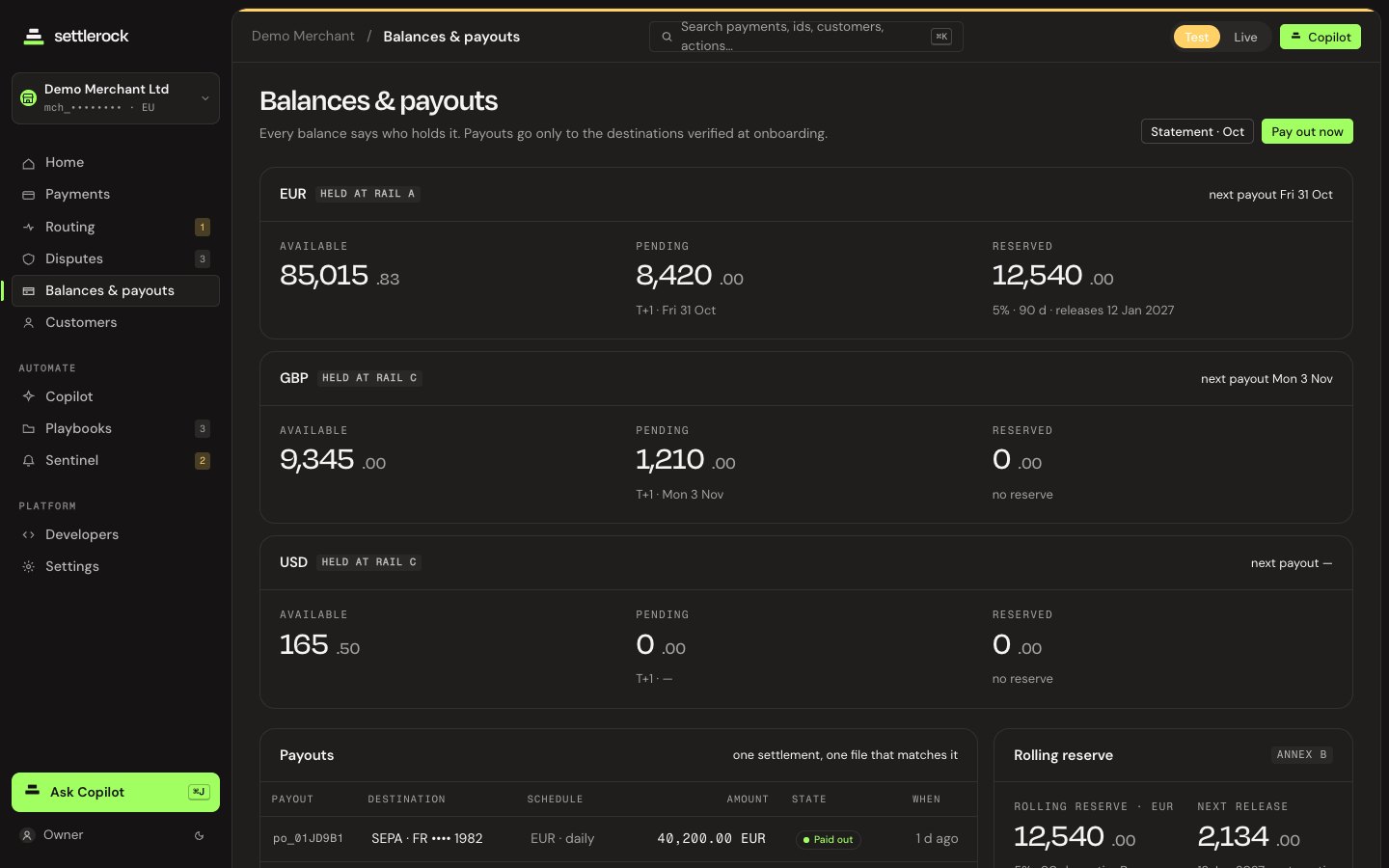
However many routes your traffic takes, you get one settlement and one file that matches it. Balances name their custodian. Payouts go only to the destination verified at onboarding.
Balances that name their custodian
Pending, available and reserved per currency, each labeled with who actually holds the funds. Your balance should never be a mystery.
Payouts to approved destinations only
Money can only leave to the destination verified at onboarding. A hijacked login cannot redirect your payouts.
Schedules that suit your cash flow
Daily, weekly or on demand, depending on channel and vertical. T+1 default where the partner rail supports it, no minimums; instant payouts later as a paid feature.
Fiat or stablecoin, per destination
SEPA to the bank account verified at onboarding, or USDC and EURC to your wallet through a licensed partner at a contracted quote. An option, not an architecture rewrite.
Balances
Money sitting in five processor dashboards is not really yours yet. We consolidate it, label who holds it, and pay it out your way.
Custodian labels
Every balance says which rail holds it and when it releases.
Reserve schedule
The rolling reserve, its percentage and its release dates, to the day.
Payout calendar
What leaves when, to which approved destination, with the batch reference you reconcile against.
One file
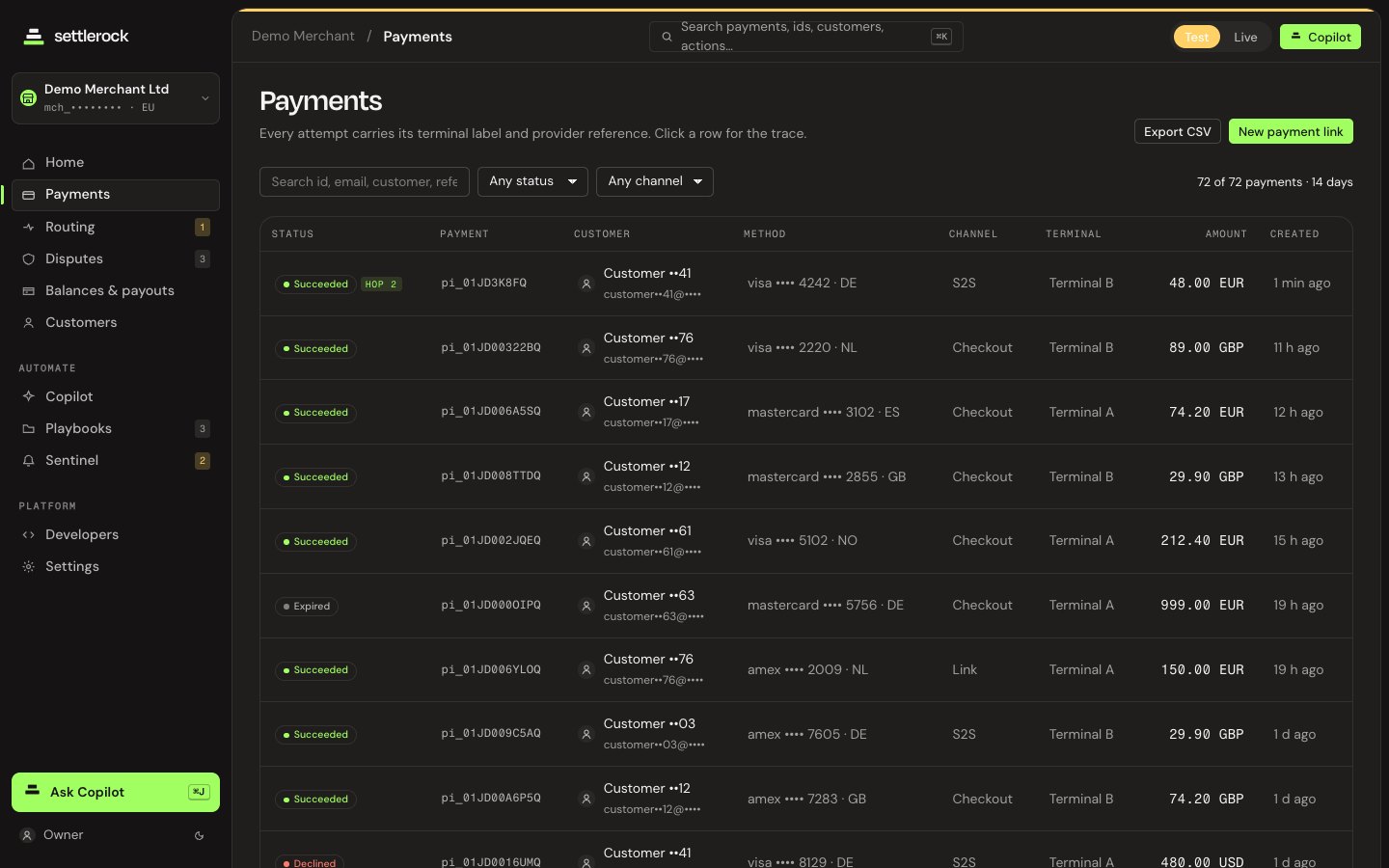
Gross, fee and net on every payment. Period statements tie to payouts to the cent.
Our take on a
dashboard

or
For finance
One settlement file across every rail, with provider references that never change. Month end stops being a stitching exercise.
For treasury
Choose fiat or stablecoin per payout destination. Refund destinations are captured at payment time, so nothing is stranded.
Got questions?
We’ve got answers.
Straight ones,
in writing
When do I get paid?
T+1 by default where the partner rail supports it, with no minimums. Instant payouts arrive later as a paid feature, and we will not quietly rebrand fast-ish as instant.
Who holds my money?
The licensed partner carrying the rail. The dashboard labels every balance with its custodian, and every payout can only go to the destination verified at onboarding.
Can I settle in stablecoin?
USDC and EURC to your wallet, executed by a licensed partner at a contracted quote, per payout destination. It carries an early-access label until your partner contract lands. USDT is blocked for EEA users by a compliance layer merchant config cannot override.
How are reserves set?
Rolling reserves are stated per risk tier at underwriting and written into your agreement. The dashboard shows the release schedule to the day. Nothing moves that is not in writing.
How do disputes affect my ledger?
A dispute references its payment and its financial impact lands as ledger entries, never annotations. Early alerts you refund in time never count against your ratio.
Where are the prices?
Not on the website. Rates, reserves and settlement schedules depend on your vertical, your history and the rail we underwrite you onto. They are quoted per merchant and written into the agreement before you process a cent.
Anyone quoting you numbers before reading your business is guessing.
Why do you never name your acquirers?
Naming them tells your competitor where you process and invites every merchant we turned down to knock on their door. Rails carry a stable label for the life of your account, and the provider reference you reconcile against never changes.

Nine rails, one contract
Ready to
get paid?
Tell us where you want the money to land. We will tell you the schedule, in writing.