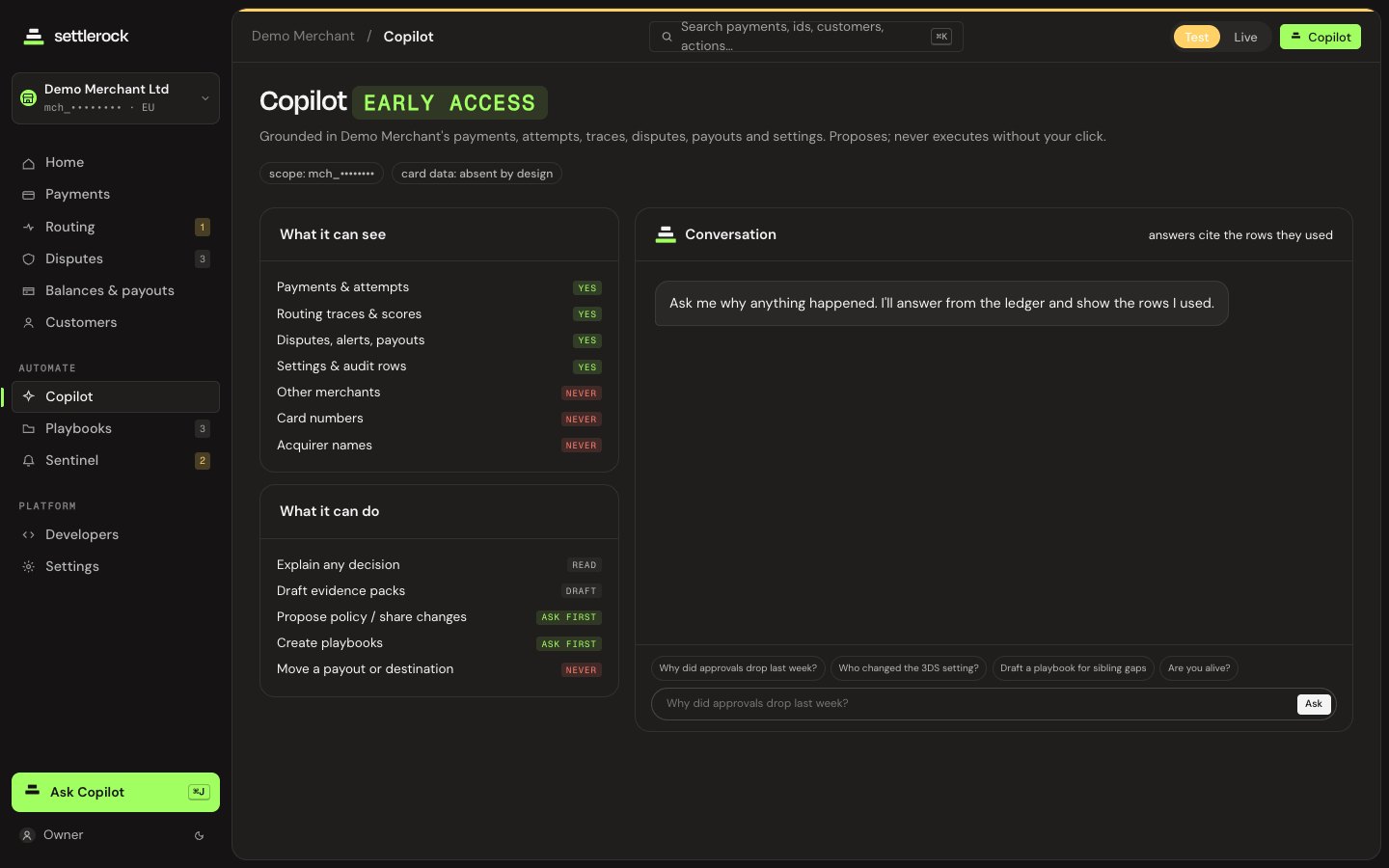
Route

Routing is the product. Anyone can pass a transaction to a bank.
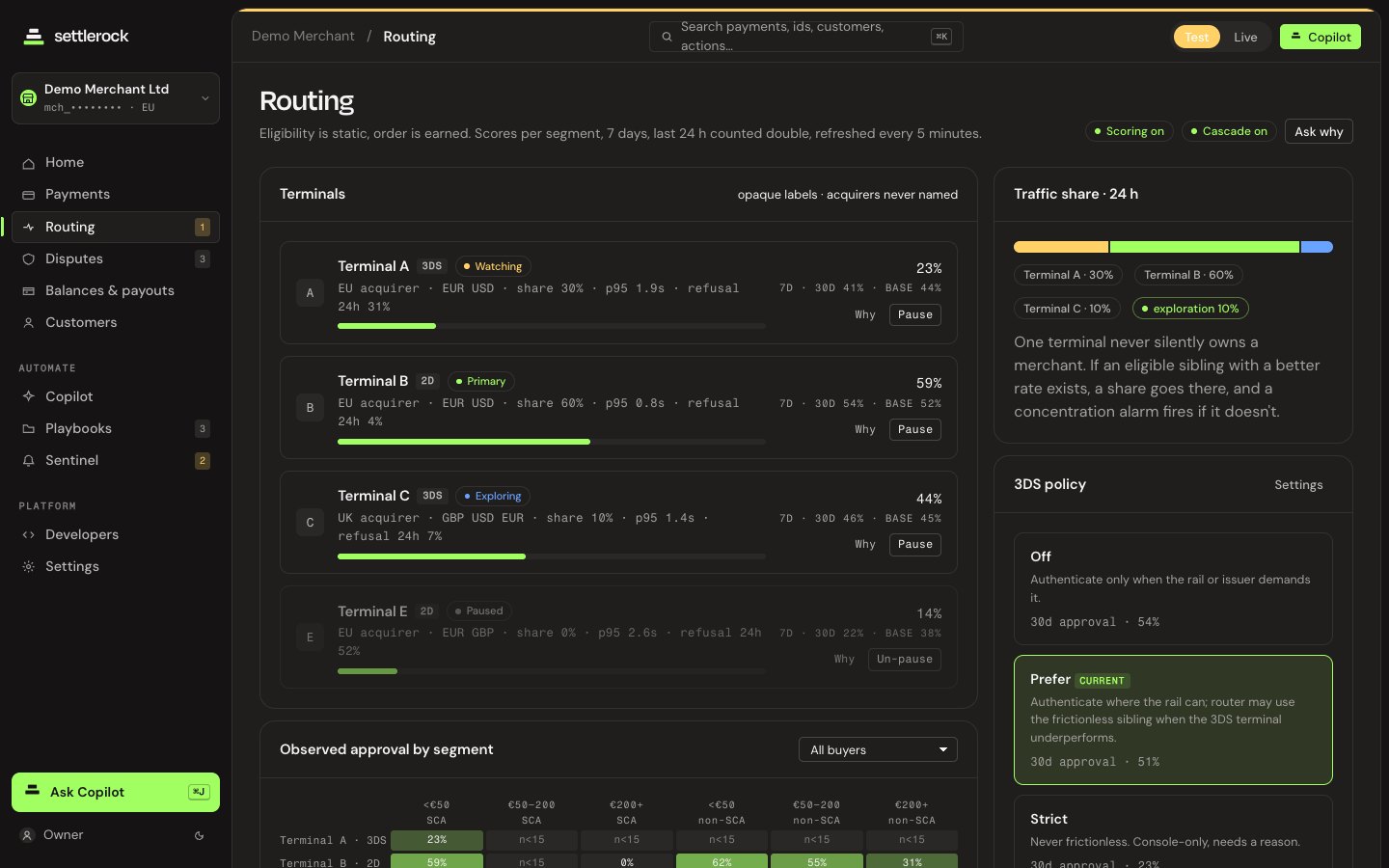
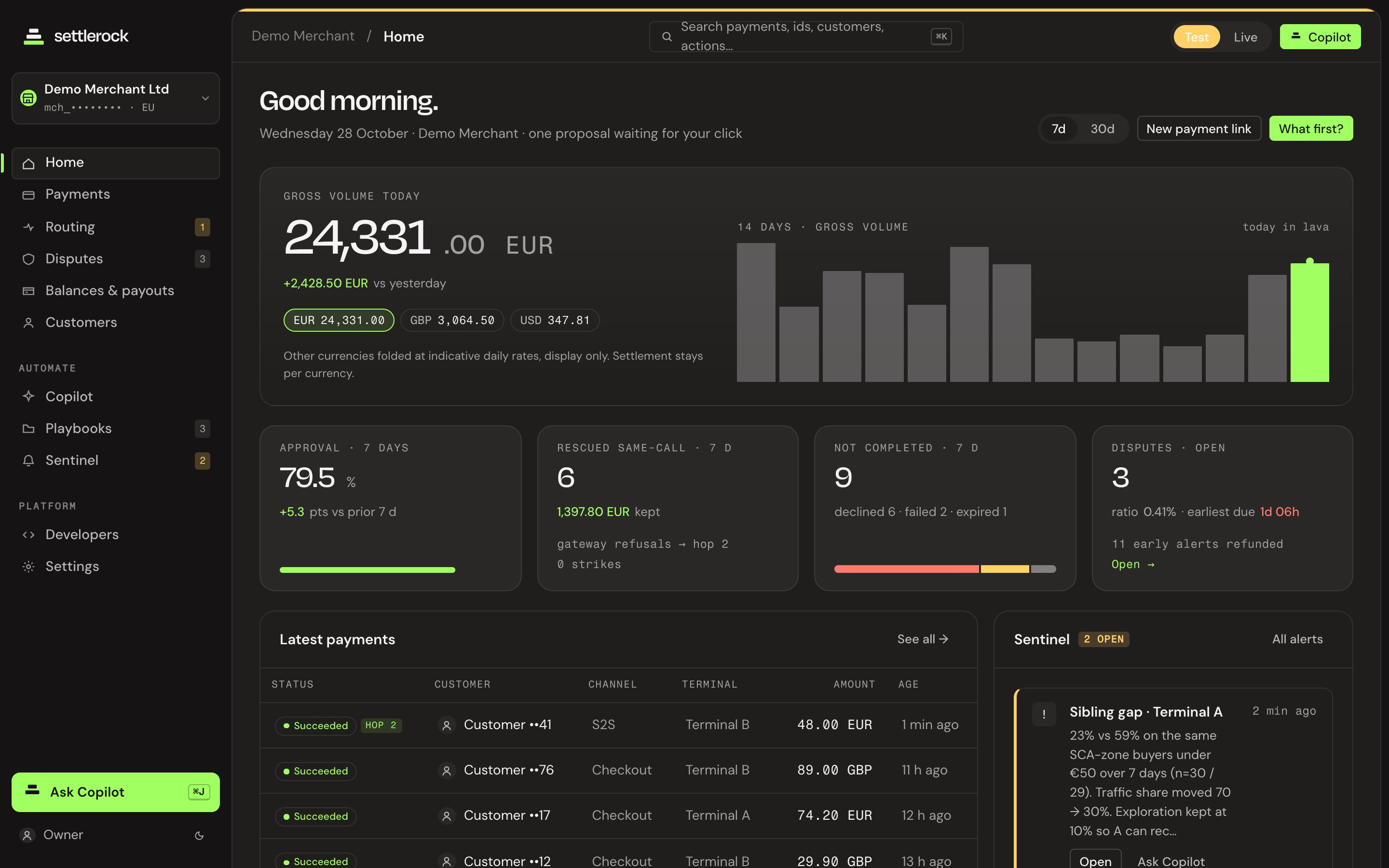
Every terminal earns a score per segment from what actually got approved. Rules are an override layer, not the brain. Gateway refusals hop inside the same call. Every decision carries its trace.
Reads every transaction, in real time
BIN, country, amount band, scheme, auth mode, buyer zone, vertical. The segment is the unit the router learns on.
Scores every terminal, for this exact segment
A smoothed approval rate over 7 days with the last 24 h counted double, snapshotted every 5 minutes. Not a model. Not a mystery.
Rescues gateway refusals, same call
Pre-issuer refusals hop to the next eligible terminal inside the same request, two hops deep at most. Your customer sees one payment flow.
Explains every decision with its numbers
Why this terminal is answerable from the trace, with the scores it used. Never because it was the oldest.
Features
Settlerock came from running merchants in these verticals and wondering, every quarter, why the router did what it did. The routing screen is the answer we wished we had.
Scores per segment
Every terminal, every segment, with the sample size next to the score. Thin samples fall back to the zone.
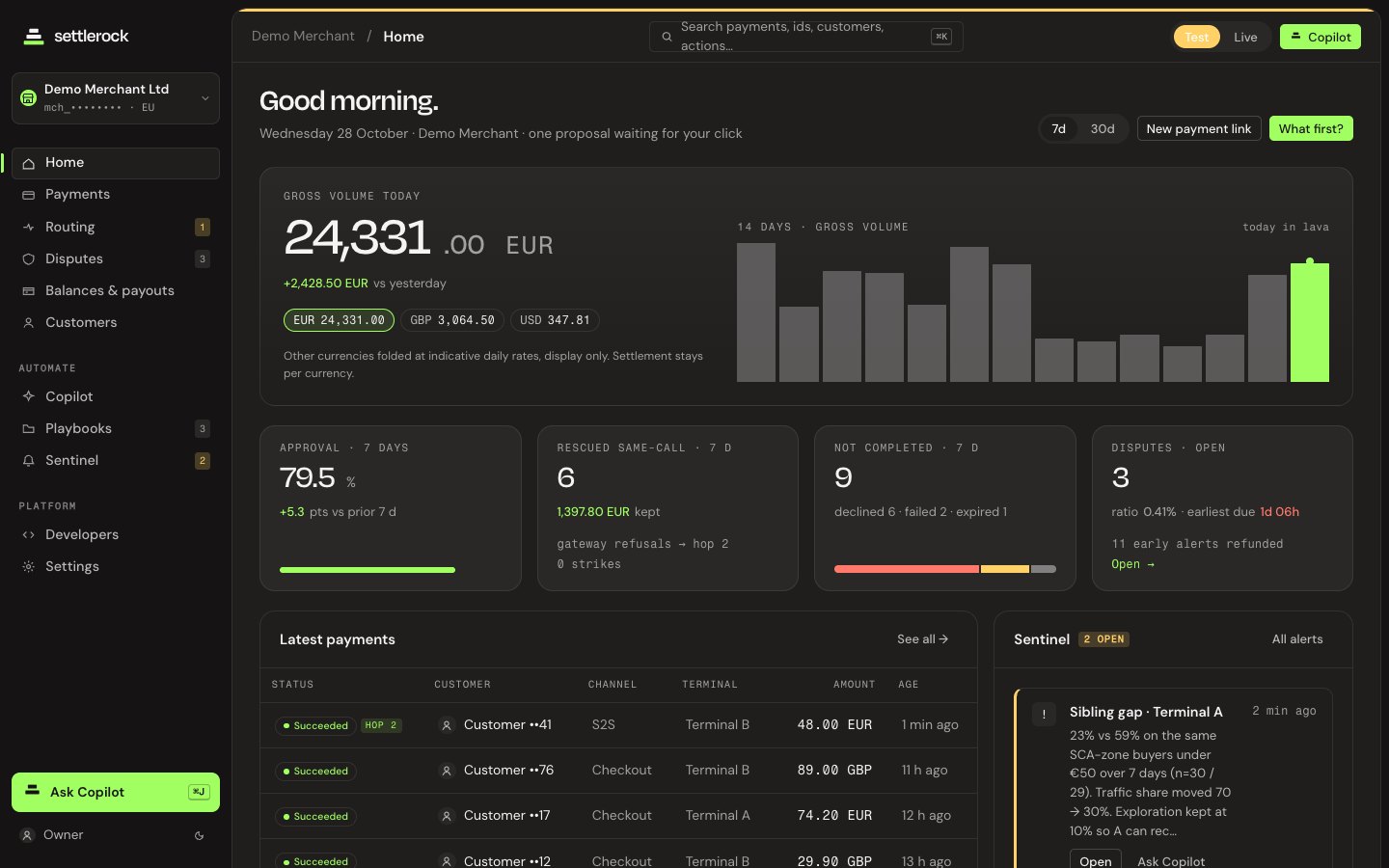
Traffic share
Where the last seven days actually went, and the ten percent that explored.
Policy picker
Off, prefer or strict 3DS, each with its observed cost in approvals and fraud before you choose.
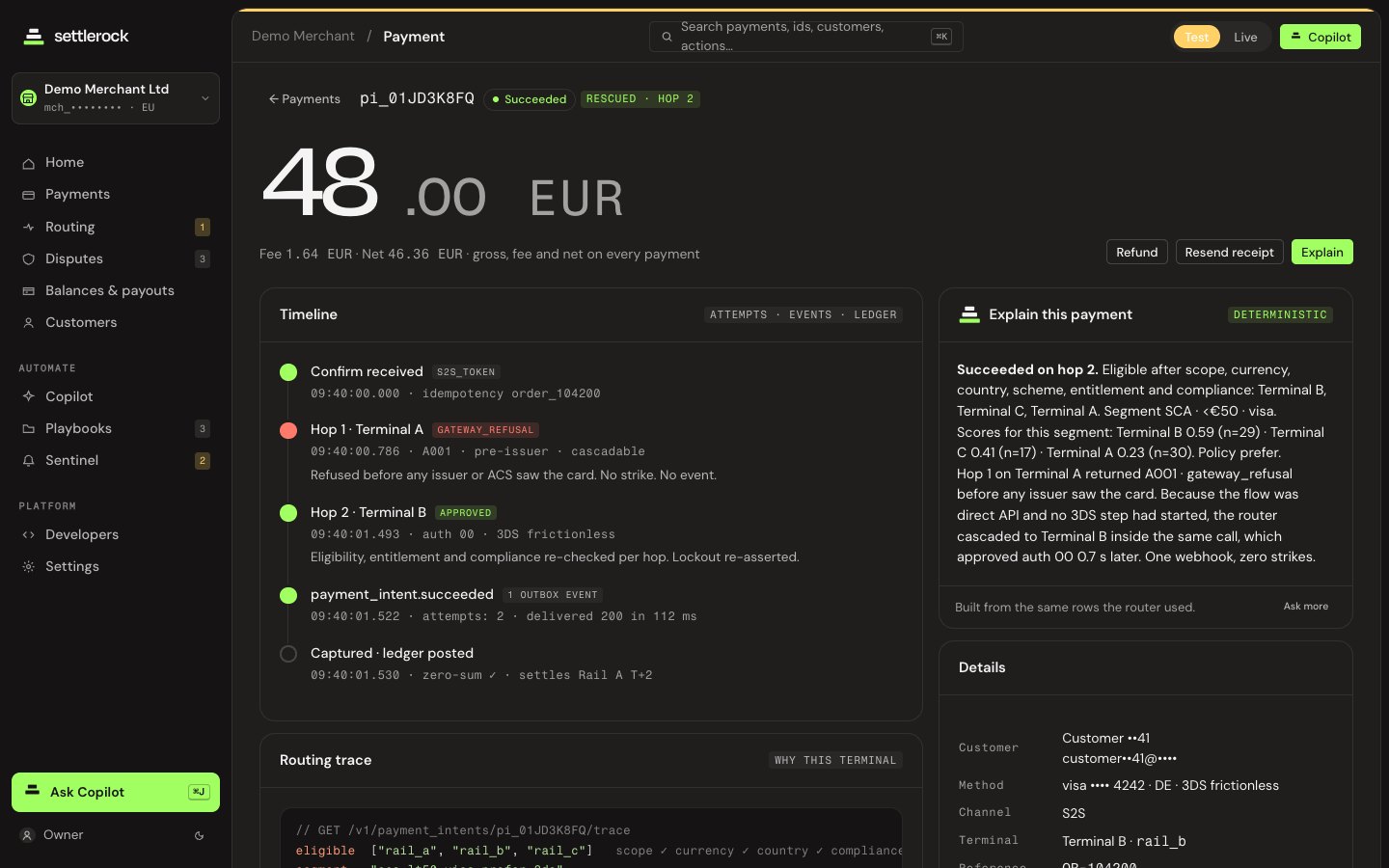
Preflight
Type a country, amount and scheme and see which terminal would take it right now, and why.
Our take on a
dashboard

or
For merchants
Open the dashboard and read the trace. No SQL, no account manager, no waiting for a monthly review to learn why Tuesday was bad.
For developers
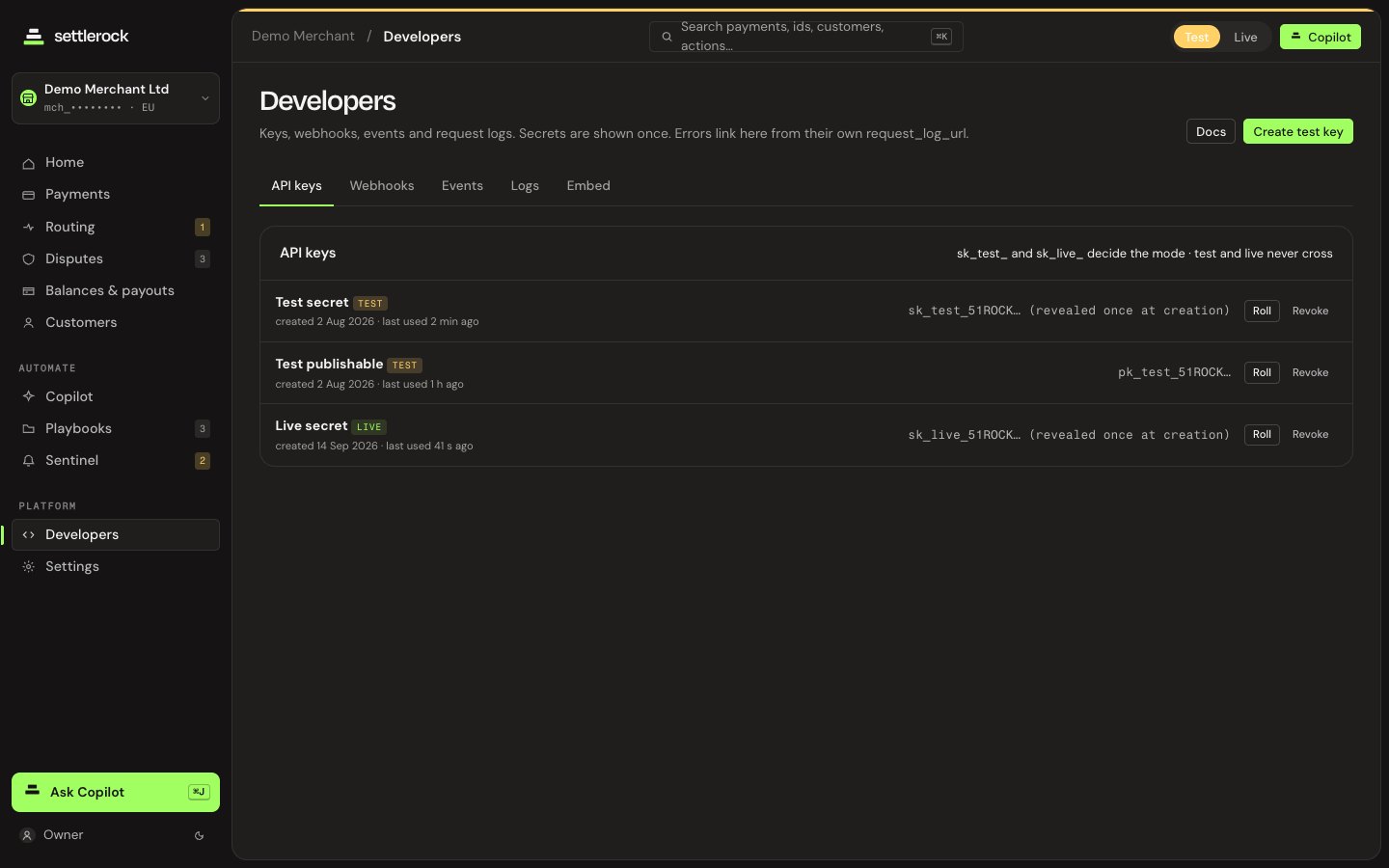
GET the trace on any payment intent. Eligible terminals, scores, hops and outcomes, as JSON, with a link to the Explain panel.
Got questions?
We’ve got answers.
Straight ones,
in writing
How does outcome routing decide?
Eligibility is static: scope, currency, country, scheme, entitlement and the compliance layer decide which terminals may see a payment. Among the survivors, the observed approval rate for that payment’s segment decides who goes first.
The score is (approved + 2) / (attempts + 4) over seven days, with the last 24 hours counted twice. Not a model. Not a mystery.
What is same-call rescue?
When a gateway refuses a card before any issuer saw it (a country rule, a BIN block, a terminal policy), the payment hops to the next eligible terminal inside the same request. Depth cap two. Issuer declines and fraud verdicts are never retried.
Can I override the router with rules?
Yes. Rules are an override layer: pin a scheme to a terminal, block a country, cap a share. The router still learns underneath, so when you remove a rule it knows where to go.
What happens when a terminal has no data?
Fewer than 15 attempts in a segment and the score falls back to the terminal’s zone, then to the terminal overall. Ten percent of traffic explores, so a cold terminal earns its share back instead of being starved.
What does the routing trace contain?
Which terminals were eligible, the scores it used, the policy, whether the payment explored, every hop with its outcome and latency, and a link to the Explain panel. It is on every payment, in the API and in the dashboard.
Is Settlerock a PSP?
No. Settlerock is the layer above the PSPs and acquirers. You integrate once with us; we route each payment to the rail most likely to approve it, rescue gateway refusals in the same call, and hand you one settlement file.
Acquiring, processing and the safeguarding of funds sit with licensed partners named in your agreement.
Who is Settlerock built for?
Merchants the mainstream PSPs decline or derisk: iGaming, forex and CFD, digital assets, health and nutra, dating and entertainment, fintechs and the complex verticals nobody has a category for yet.
If your business is legal where you sell, licensed where required and honestly described, we can usually find a rail.
Where are the prices?
Not on the website. Rates, reserves and settlement schedules depend on your vertical, your history and the rail we underwrite you onto. They are quoted per merchant and written into the agreement before you process a cent.
Anyone quoting you numbers before reading your business is guessing.

Nine rails, one contract
Ready to
route?
Tell us what you sell and we will tell you which rails carry it, in writing.