Fintechs

One login. Many merchants.
then rails
Multi-brand groups, platforms with several products, PSP resellers and businesses with per-country entities: run them all under one organization. Separate merchant accounts, separate ledgers, separate settlement, one sign-in, one API.
Integration number four
Every new acquirer is another integration, another reconciliation file, another set of webhooks.
Pooled accounts, commingled ledgers
One brand's chargebacks blur another's books, and the bank sees one risky blob.
Finance sees everything or nothing
Roles that are either god mode or useless.
Routing you cannot see
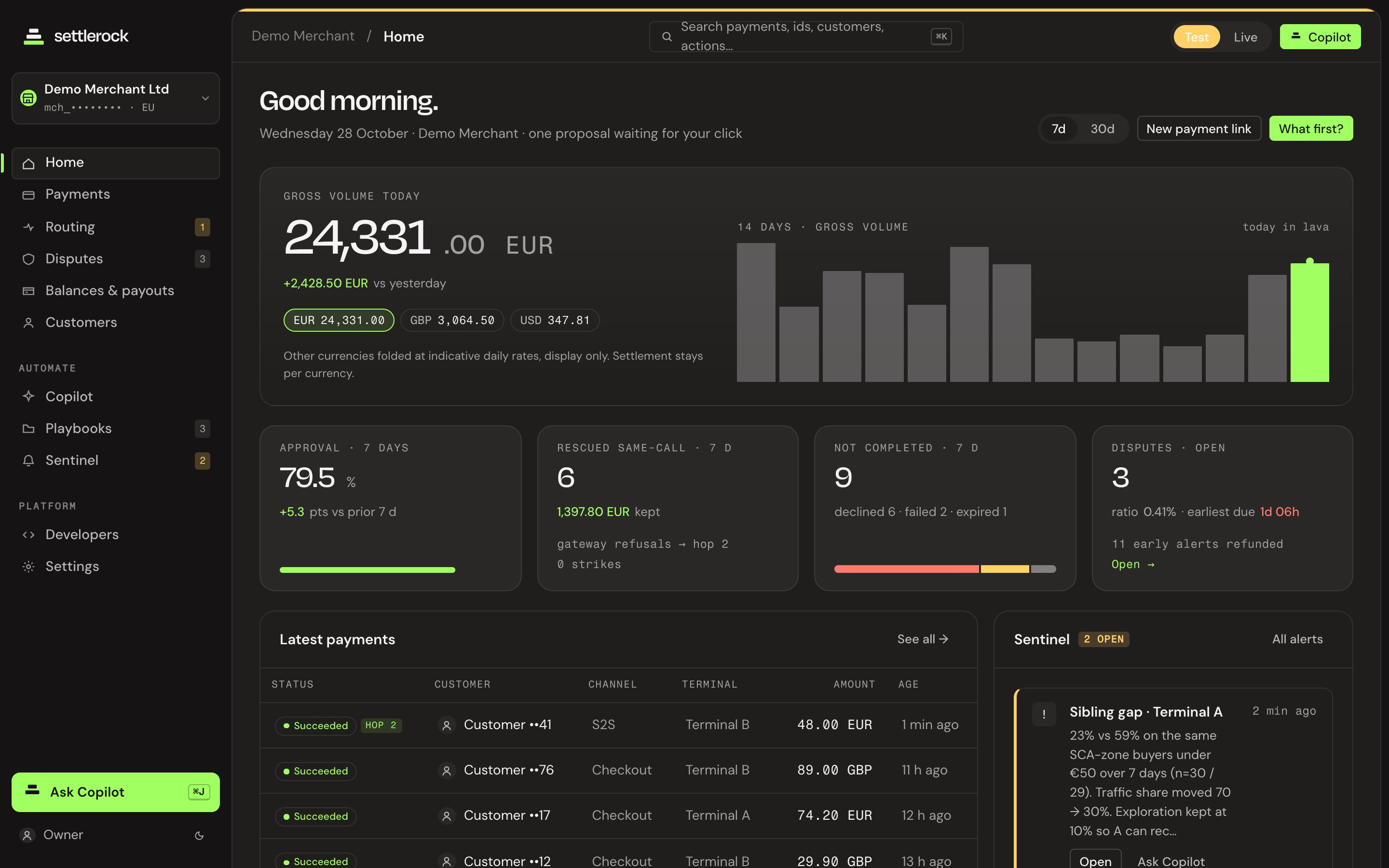
Your orchestration vendor makes decisions you cannot audit for your own merchants.
The same four verbs,
pointed at your flow.
Route, settle,
protect, automate
Multi-brand groups
A merchant per brand: its own keys, webhooks, ledger and agreement. One organization on top for access and overview.
Platforms with several products
New products reuse the same integration shape. Each is underwritten on its own merits at the licensed acquirer.
PSP resellers & ISOs
Bring your merchants onto rails you cannot reach alone, with routing and reporting you can show them.
Per-country entities
A EUR entity and a wallet-settled entity can live in the same group. Finance sees balances everywhere; a brand team sees only its own.
Questions from
your vertical.
And a few
general ones
How long does onboarding take?
Sandbox is instant. Live mode requires business verification: every business is reviewed by a person before live keys exist. Bring the evidence for your category and the first email can be the last.
I was terminated by my last PSP. Is that a problem?
Termination history is underwriting input, not a disqualifier. Hiding it is what costs everyone a month.
Which businesses will you not route?
Unlicensed gambling, weapons, illegal drugs, prescription pharmaceuticals, counterfeits, pyramid schemes, binary options and a few more. The full list is on the restricted businesses page, rendered from the same data our review tooling uses.
Can an automation move my money?
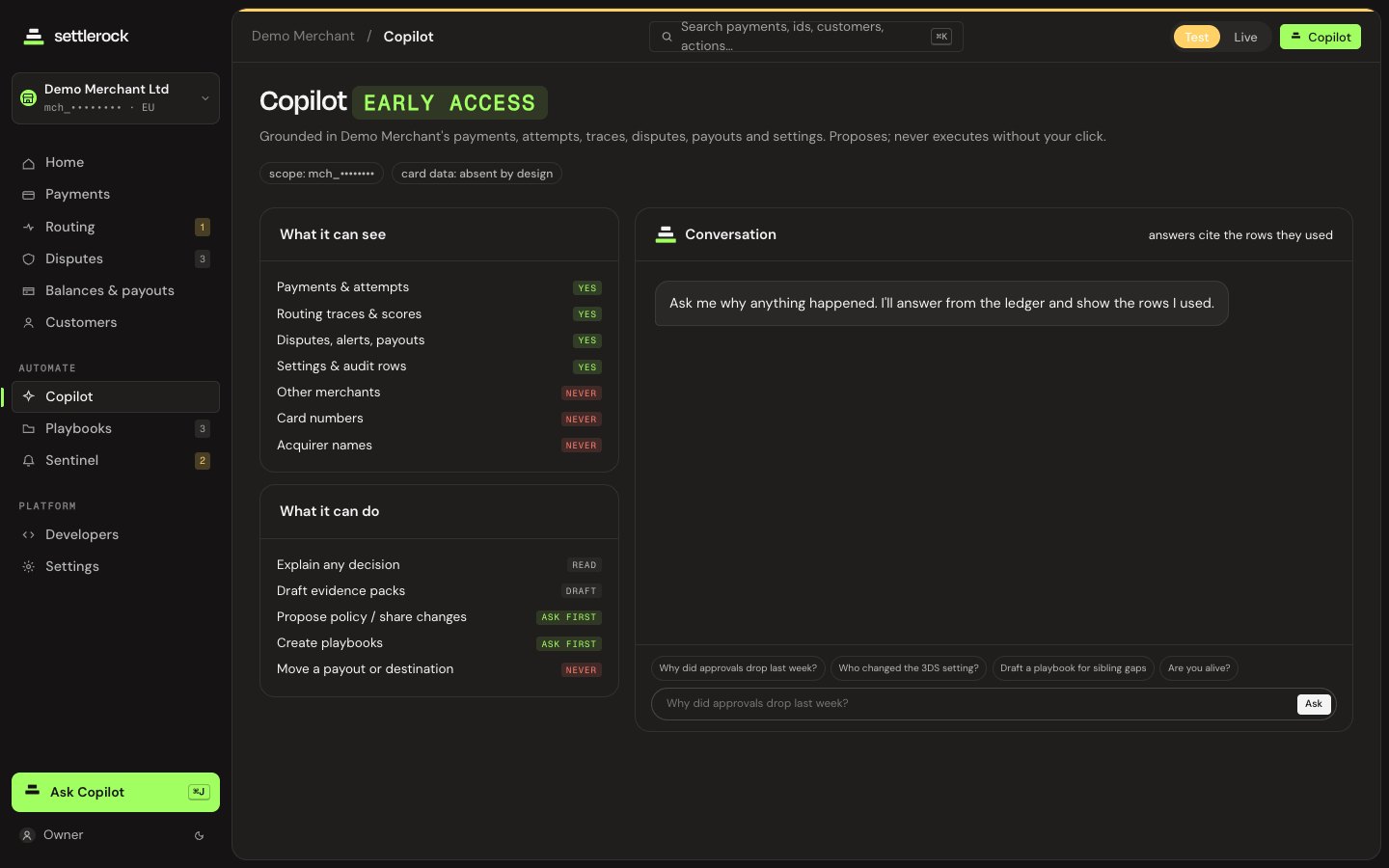
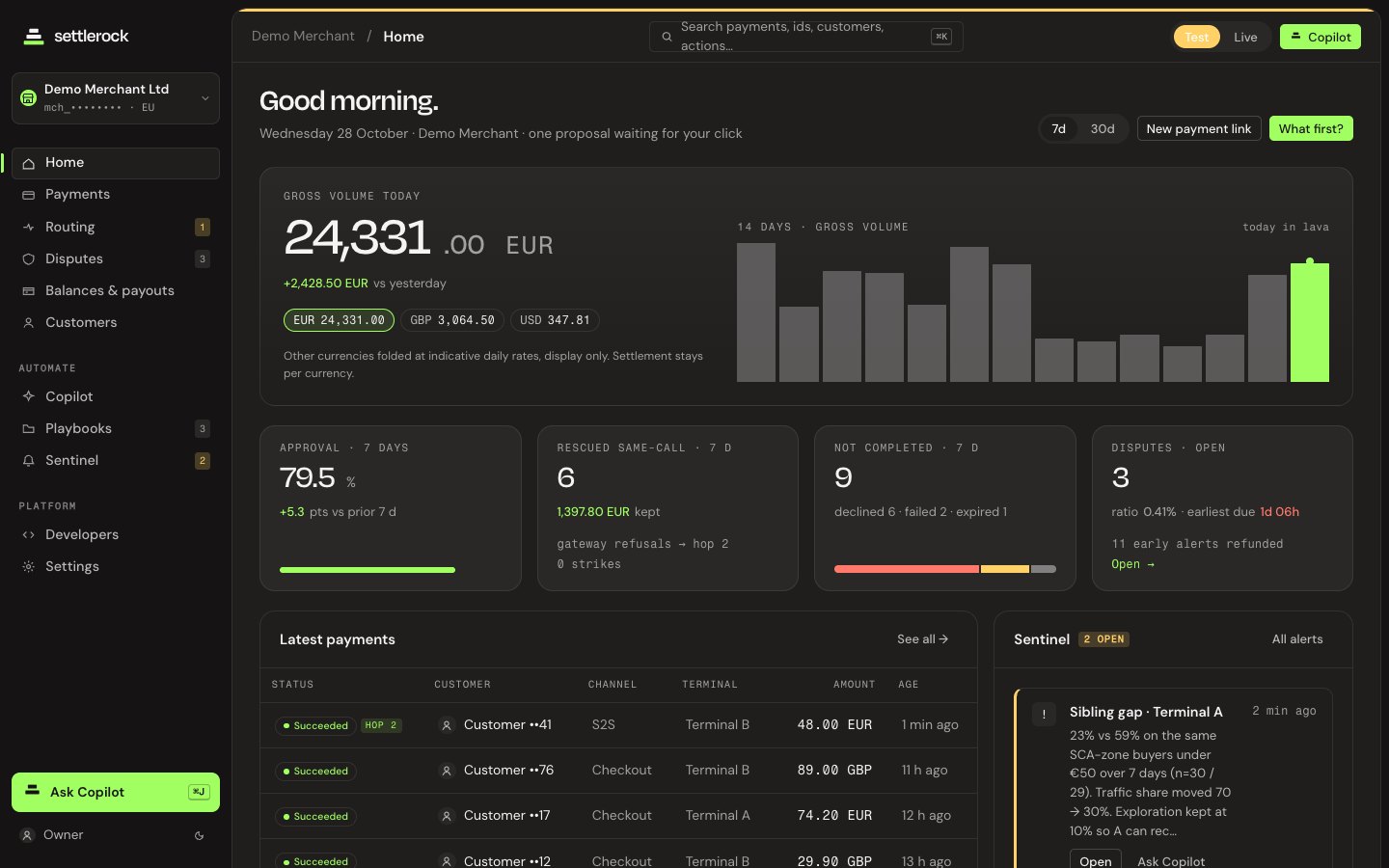
No. The Copilot proposes; a person confirms. Playbooks are bounded to traffic shares, pauses, policies, refunds of early alerts, drafts and notifications. No automation can create a payout or change a destination.
When do I get paid?
T+1 by default where the partner rail supports it, with no minimums. Instant payouts arrive later as a paid feature, and we will not quietly rebrand fast-ish as instant.
Who holds my money?
The licensed partner carrying the rail. The dashboard labels every balance with its custodian, and every payout can only go to the destination verified at onboarding.
Can I settle in stablecoin?
USDC and EURC to your wallet, executed by a licensed partner at a contracted quote, per payout destination. It carries an early-access label until your partner contract lands. USDT is blocked for EEA users by a compliance layer merchant config cannot override.

Nine rails, one contract
Tell us about your entities.
How many merchants, which countries, which currencies, and who needs to see what. We'll tell you how the organization is shaped, in writing.